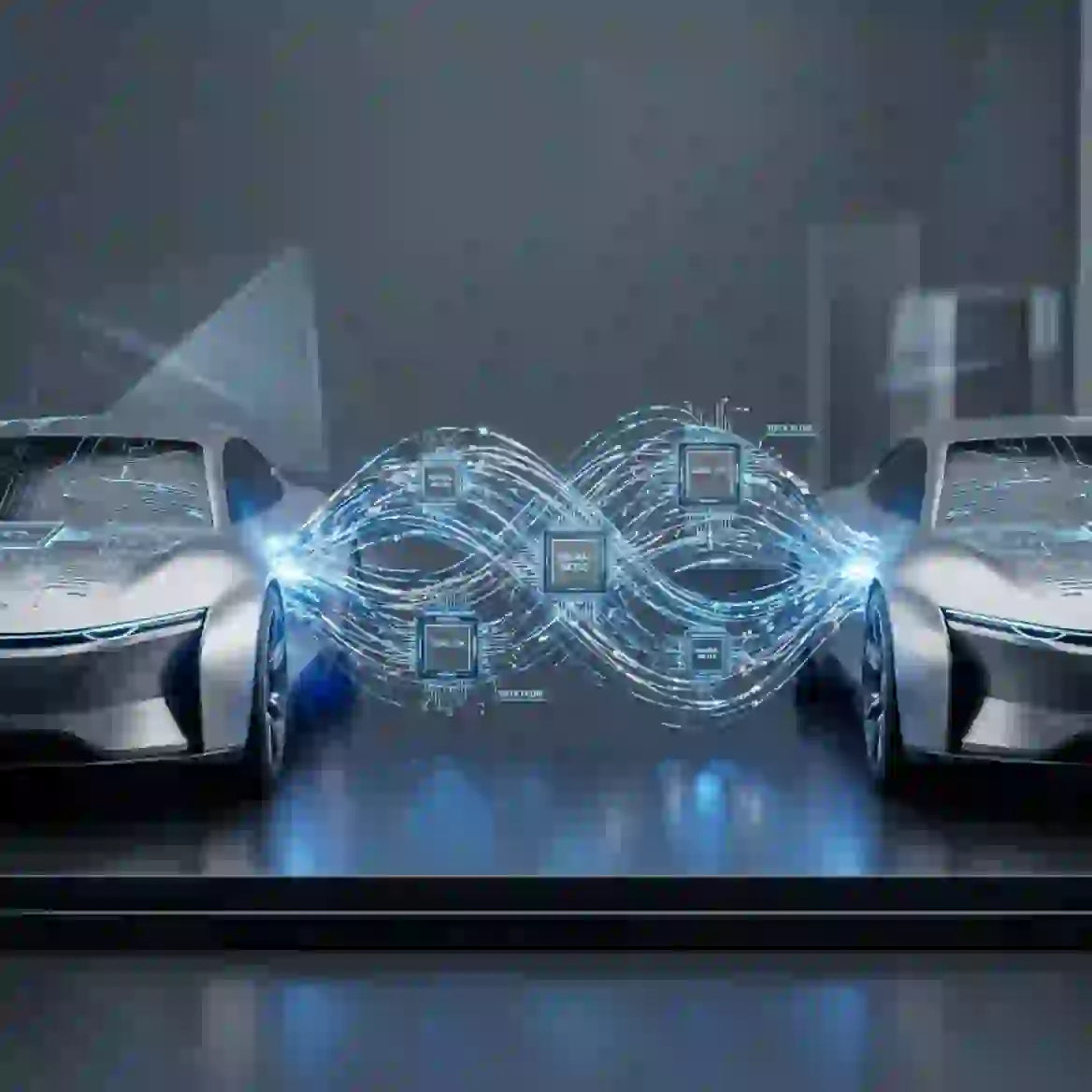
NVIDIA NVHBM AI acceleration is poised to revolutionize the landscape of artificial intelligence technologies. NVIDIA has introduced the NVHBM, a custom high-bandwidth memory architecture aimed at significantly enhancing memory performance and power efficiency for AI accelerators. As AI workloads continue to grow, the demand for accelerated memory throughput and reduced energy consumption is critical. This new architecture marks a step change in overcoming these bottlenecks.
Innovative Memory Integration
Traditional High Bandwidth Memory (HBM) architectures embed the memory controller on the main silicon compute die of AI accelerators, occupying valuable real estate that could be dedicated to compute units. NVIDIA NVHBM AI acceleration addresses this by integrating the memory controller directly into the base die of the 3D HBM stack. This innovative design frees up more space on the accelerator die, enabling up to 25% more area for additional computational logic.
Performance and Efficiency
The improvements offered by NVIDIA NVHBM are substantial. Compared to conventional HBM4E architectures, NVIDIA's approach increases memory bandwidth by up to 30% while reducing power consumption by 15%. This dual benefit of enhanced performance and efficiency is key to supporting the demanding requirements of modern AI applications.
Collaboration with Amazon Annapurna Labs
Amazon's Annapurna Labs is the first to partner with NVIDIA to adopt this new memory technology. Once validated by major memory partners, NVHBM will be commercially available to customers via the NVLink Fusion platform. The NVLink Fusion platform enables third-party CPUs and AI accelerators to integrate seamlessly into the NVIDIA ecosystem, serving as a conduit for broader adoption of NVIDIA NVHBM AI acceleration.
In an era where AI's footprint is ever-expanding, NVIDIA NVHBM AI acceleration represents a significant leap forward in memory architecture technology. This evolution is vital to meeting the future demands of large language models and complex multimodal AI workloads.