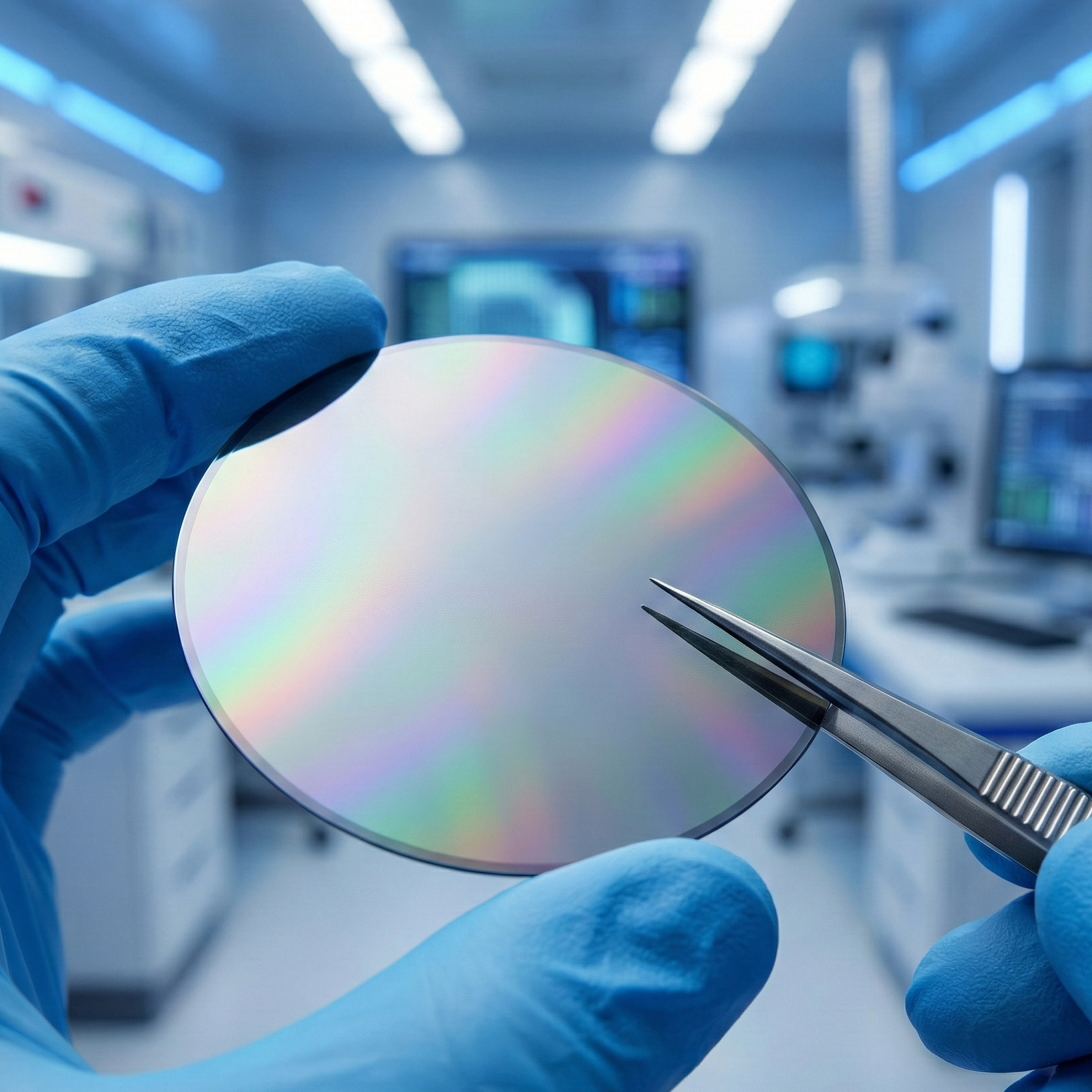
JX Metals Corporation is witnessing a significant surge in demand for its semiconductor materials, driven by the global expansion of Artificial Intelligence infrastructure. The company's Crystal Material Business Promotion Department reports that sales of Indium Phosphide (InP) wafers are projected to increase by approximately 30% in fiscal year 2025 compared to the previous year, based on wafer surface area.
The Driving Force: AI and High-Speed Data
The explosive growth of generative AI has created an urgent need for faster, more efficient data transmission within hyperscale data centers. This has triggered a spike in demand for Electro-absorption Modulated Lasers (EML) and high-speed photodiodes, both of which rely heavily on Indium Phosphide substrates. Unlike traditional materials, Indium Phosphide offers superior electron velocity, making it indispensable for the next generation of optical transceivers required for 800G and 1.6T networks.
Strategic Expansion and Future Roadmap
Recognizing that this is not a temporary spike but a long-term trend, JX Metals is accelerating its investment in production capacity. Currently, the company produces Indium Phosphide and Cadmium Zinc Telluride wafers. While their 3-inch Indium Phosphide wafers are the current mainstay for optical devices, they also supply 2-inch and 4-inch variants.
Looking ahead, JX Metals is aggressively preparing for the future of Silicon Photonics and Photonic Integrated Circuits. The company is advancing preparations for the mass production of 6-inch wafers. This shift to larger wafer sizes is a critical step for the industry, promising to reduce chip costs and enable better integration with standard semiconductor manufacturing lines, further solidifying JX Metals' position in the global semiconductor supply chain.