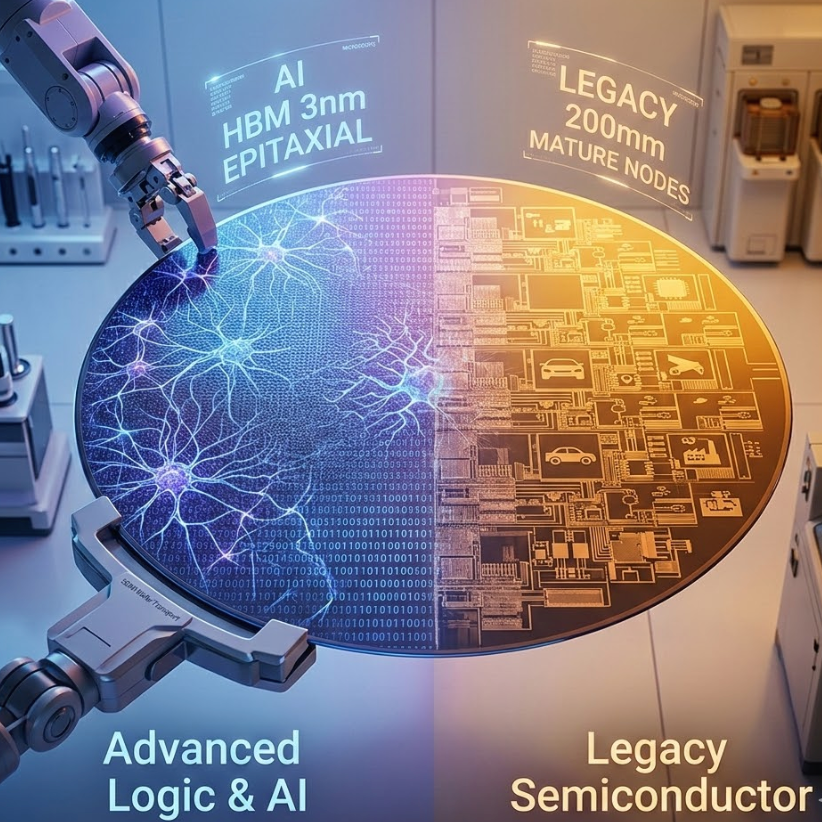
In February 2026, JX Metals Corporation announced a significant strategic move to address the surging demands of the artificial intelligence era. The company is investing approximately 20 billion Japanese Yen into its Isohara Plant, located in Kita-ibaraki City, Ibaraki Prefecture. This capital injection is specifically aimed at boosting the production capacity of Indium Phosphide substrates, a critical component for optical communication devices.
The roadmap is ambitious: JX Metals aims to triple its production capacity by the year 2030 compared to 2025 levels. This expansion is a direct response to the explosive growth of Generative Artificial Intelligence, which has placed unprecedented strain on global data centers. As data transmission volumes skyrocket, traditional electrical interconnects are hitting a wall in terms of heat generation and power efficiency.
Indium Phosphide is emerging as the "gold standard" material for this transition. Unlike traditional silicon-based components, Indium Phosphide-based light-emitting and light-receiving elements offer superior performance in converting electrical signals to light and vice versa. This material is indispensable for advanced technologies such as Photoelectric Conversion and Co-packaged Optics. By integrating optical components closer to the processor, data centers can achieve high-speed, high-capacity transmission while significantly reducing power consumption.
Industry experts note that as we move toward 800G and 1.6T networking speeds, the role of Indium Phosphide will only become more central. JX Metals’ proactive investment ensures it remains a dominant player in the global semiconductor supply chain, providing the foundational materials necessary for a sustainable, high-speed digital future.